The Dependencies You Choose
Enterprise architects worry endlessly about vendor lock-in.
The concern is understandable. Buy a software platform and you become dependent on another company's roadmap, pricing, and priorities. Build it yourself and, at least in theory, you remain free.
It is a comforting idea. It is also where the confusion begins.
A bank buys a software platform and worries about being trapped by a supplier. Another bank builds its own and worries no longer.
Five years later, the first bank is dependent on a vendor. The second is dependent on Martin.
Every organisation has a Martin. He built the original system. Nobody fully understands it except him. His calendar is always full. His resignation would trigger a series of emergency meetings.
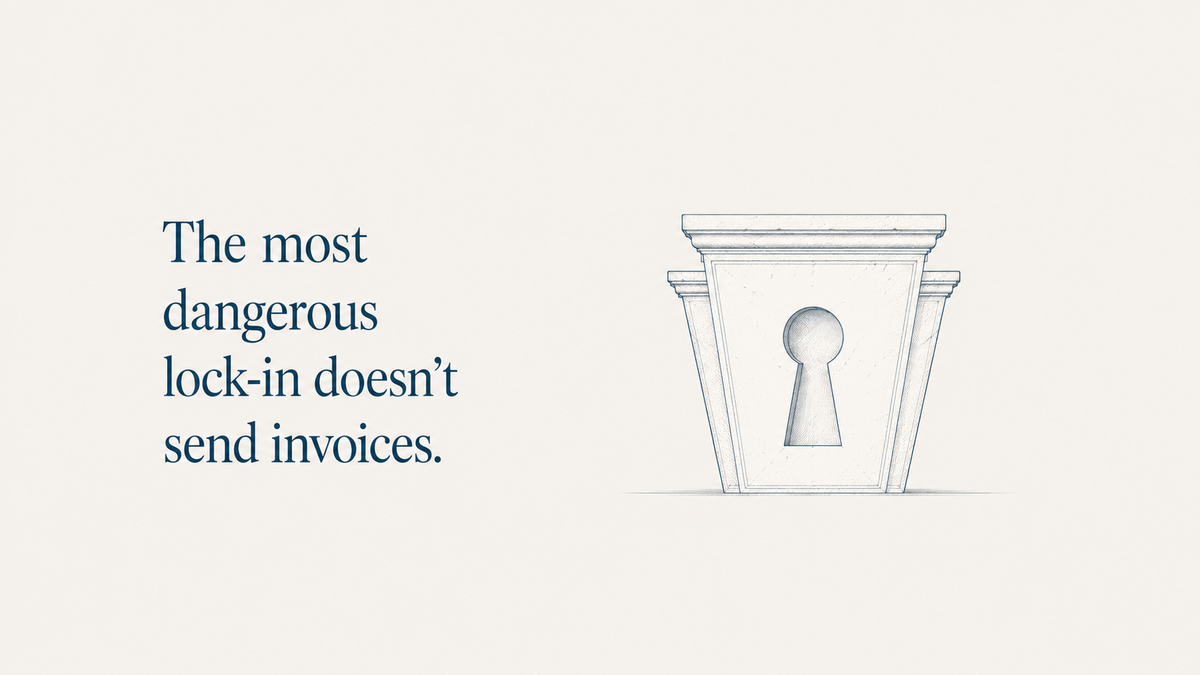
The vendor sends invoices. Martin takes holidays.
Both are dependencies. One simply feels more like ownership.
In many cases, it is the more restrictive form of lock-in. A vendor survives only by continuing to earn customers. Competitors emerge. Features improve. Prices come under pressure. An internal system faces no such forces. It improves only if the organisation continues to invest attention, talent, and money into it.
Over time, the system becomes a record of problems that no longer exist and assumptions nobody remembers making. The people who made those decisions leave. Their decisions stay.
Companies worry that vendors will hold them hostage.
They rarely notice when they have already taken themselves hostage.