The Cost of Waiting
"It has been a problem for six months. What's another three?"
Organizations scrutinize the cost of acting and largely ignore the cost of waiting.
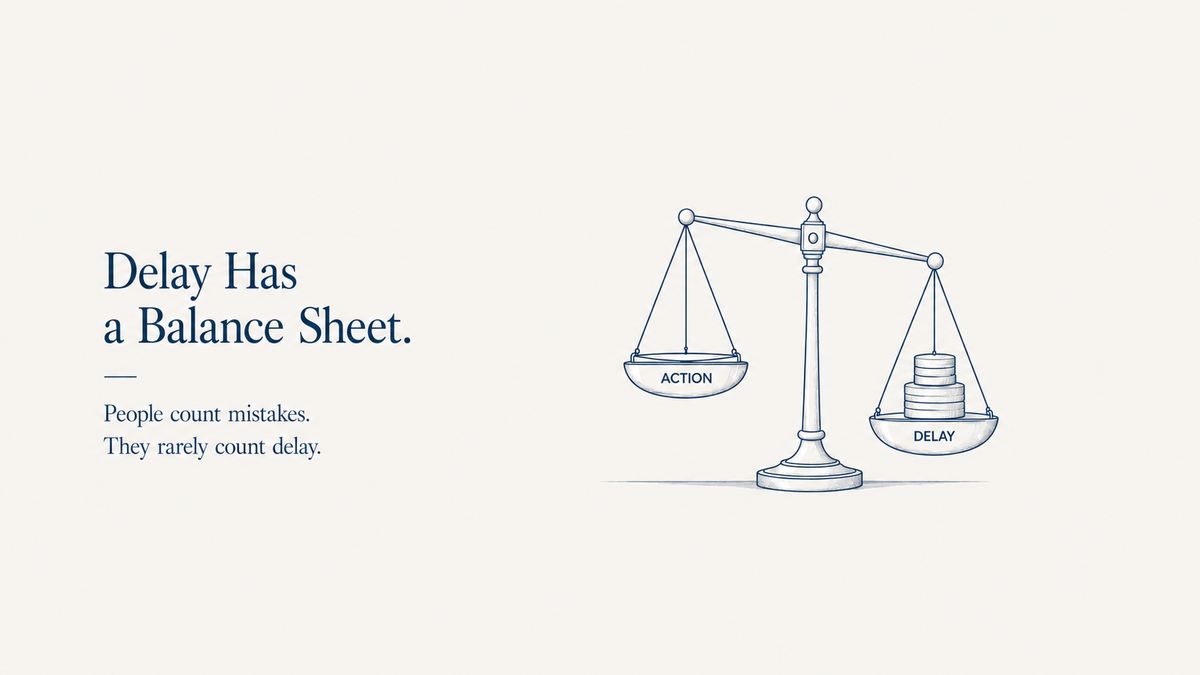
Action carries visible consequences: budgets spent, reputations exposed, decisions attached to names. Delay feels prudent because its costs are dispersed and difficult to measure. No ledger records the customers not reached, the capabilities not built, or the lessons not learned.
People count the cost of mistakes. They rarely count the cost of delay.
This creates a persistent bias: action is treated as risky, inaction as neutral. Yet inaction is simply a decision to preserve existing conditions.
Time changes perception. Problems that endure become familiar; familiarity is mistaken for stability. Delay acquires a reputation for safety.
In environments where learning compounds, waiting is expensive. A quarter deferred is not merely a quarter lost. It is a quarter without feedback, iteration, adoption or accumulated knowledge.
The fastest learner often surpasses the best planner.
The relevant question is not:
Can we afford to be wrong?
It is:
Can we afford to learn this late?
In fast-moving markets, delay is often the more expensive mistake.
Waiting is not free optionality. It is the gradual consumption of optionality itself.