Clarity and Consequence
We are instinctively drawn to clearer pictures. We polish spectacles, redraw maps and reconcile accounts to the last decimal place, comforted by the thought that a more faithful description of reality must lead to better decisions.
Sometimes it does.
A navigator benefits from a more accurate chart because he can avoid the rocks. A merchant benefits from a better price because he can trade more profitably. Information is valuable when it enlarges the range of actions available.
A simple question reveals whether it will:
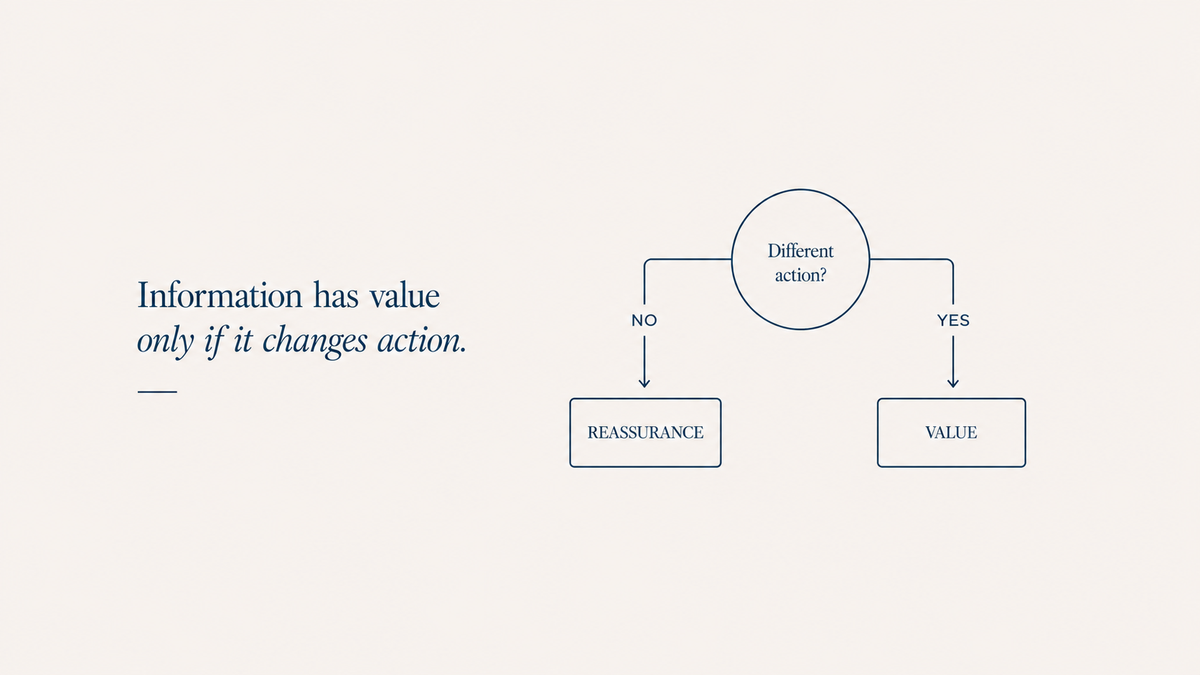
If this measure became perfectly accurate tomorrow, what would we do differently next week?
If the answer is uncertain, precision is unlikely to be the constraint.
Some knowledge is inherently actionable. Better pricing data influences pricing. Better inventory information alters purchasing. Better forecasts shape staffing, investment and allocation. Small improvements in understanding can have outsized consequences.
Other knowledge records, explains and governs. These functions matter, but greater precision seldom changes behaviour. It often provides reassurance more than leverage.
Organisations frequently mistake visibility for agency, pursuing ever more detailed reports and ever faster updates while neglecting the more consequential question:
What becomes possible because this information exists?
Information creates value not by describing reality more accurately, but by changing what people are prepared to do about it. If better information leads to the same decisions, then better information was not what was missing.