Data Culture Is Learning Culture
The organisations with the strongest data cultures are often the ones talking least about data.
Consider an elite athlete. Improvement rarely arrives in dramatic leaps. It begins with a tiny observation: a runner notices she is two seconds slower than yesterday; a swimmer feels slightly more resistance in the water; a cyclist experiments with a different cadence. Measure. Adjust. Repeat.
What separates great athletes from everyone else is not access to more information. It is the ability to learn from feedback faster than their competitors.
The same principle applies to organisations.
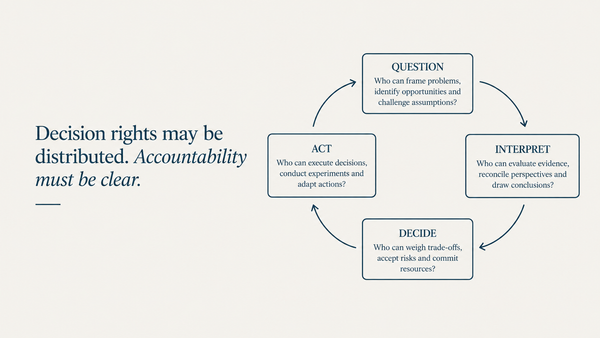
When leaders talk about building a data culture, the conversation often centres on dashboards, reports, and technology. Yet the real question is much simpler: can the people closest to the work answer their own questions?
Why is this process slowing down? Why are customers behaving differently? Why is one team outperforming another?
In weak cultures, these questions are escalated. In strong cultures, they become opportunities for learning.
Tools matter, but only because they shorten the distance between curiosity and insight. The goal is not more reports. The goal is an owner-operator mindset at every level—where people can investigate, decide, and improve.
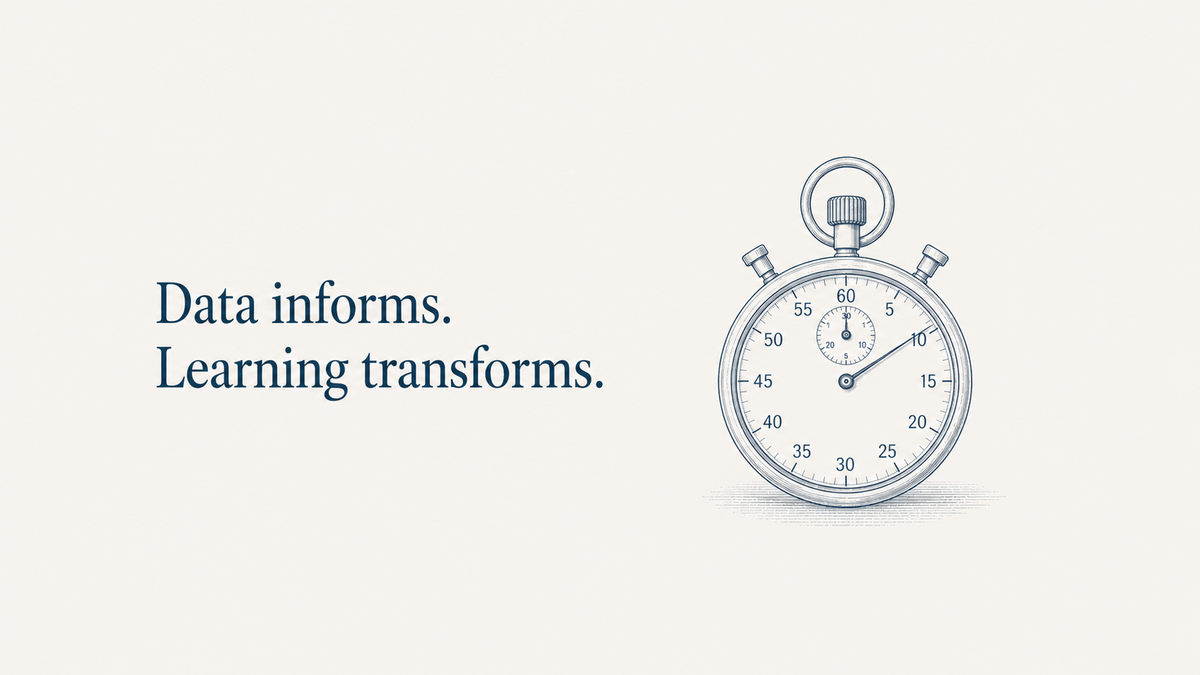
Most organisations think data creates advantage. It doesn't. Learning does.
Data simply shortens the distance between reality and action.
A data culture is a learning culture—one that learns from reality faster than its competitors.