When Knowledge Becomes Abundant

For most of history, knowledge was hard to find.
It lived in libraries, universities, professions, and experts. Access was uneven. Those who knew more often had an advantage over those who knew less.
Artificial intelligence changes that.
For the first time, expertise is becoming widely accessible. A question that once required a specialist, a consultant, or hours of research can now be answered in seconds. Knowledge that was once scarce is becoming abundant.
At first glance, this looks like a technological story. It is actually a human one.
Whenever something valuable becomes abundant, advantage moves elsewhere.
When everyone can access the same knowledge, knowing more matters less. What matters is what you do with it.
AI is remarkably good at finding patterns in what is already known. It synthesizes, predicts, compares, and optimizes. Its strength is convergence: bringing many ideas toward the most likely answer.
But progress often begins in the opposite direction.
The scientist who questions accepted theory. The entrepreneur who sees an opportunity others dismiss. The inventor who pursues an idea that appears irrational until it succeeds.
Knowledge helps us find answers. Original thought helps us find new questions.
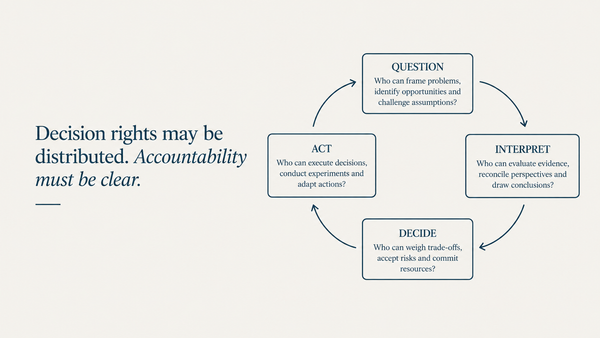
As knowledge becomes democratized, independent thinking becomes more valuable. The ability to challenge assumptions, reframe problems, and imagine alternatives becomes the new differentiator.
Technology democratizes knowledge.
Original thought remains scarce.