Ideas Are Invitations
Watch what happens in most meetings.
The first idea is almost never the best idea.
Yet it is often the most important.
Not because it is correct. Quite the opposite. It is incomplete. It gives everyone else something to push against.
This is one of the peculiar things about how ideas work. We imagine their value lies in their quality. Often, their value lies in their ability to provoke a response.
A polished idea is strangely inert. It arrives with its conclusions already attached. There is little left to do except agree or disagree.
A rough idea behaves differently. It invites participation.
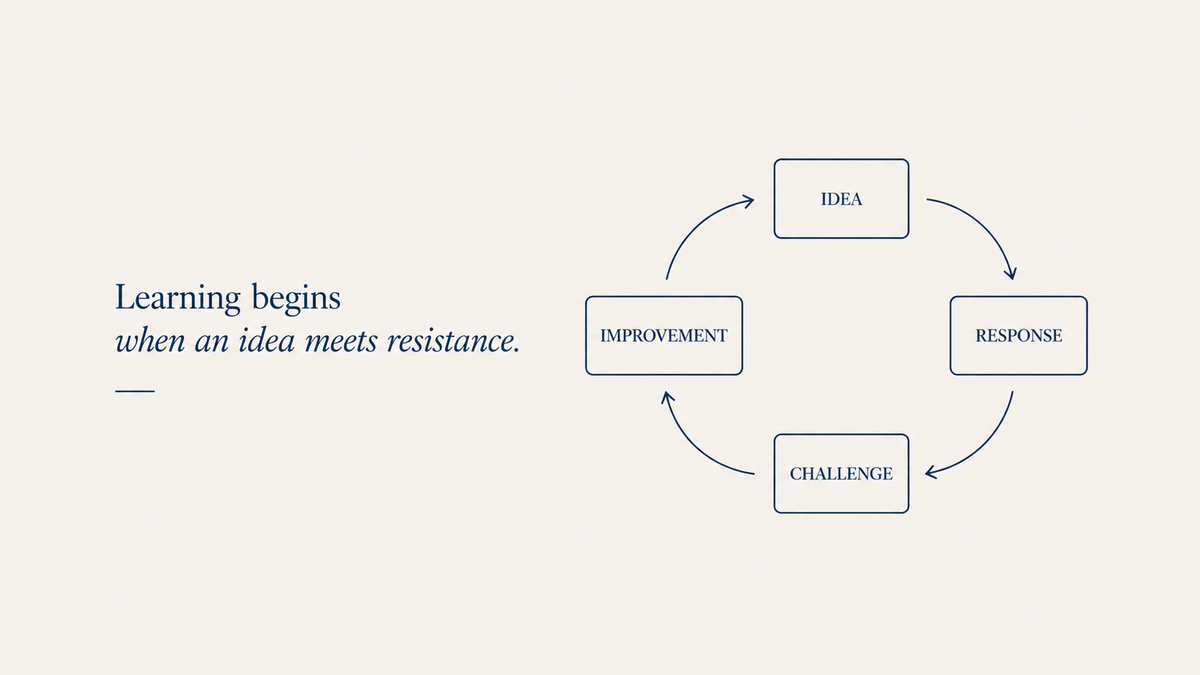
Someone spots a flaw. Someone sees an opportunity. Someone asks a question nobody else had considered. What began as a mediocre idea becomes a useful conversation.
That is why the most effective builders are often comfortable sharing work before it is finished. They are not lowering the standard. They are accelerating the feedback loop.
Most people treat ideas as statements.
The best thinkers treat them as experiments.
They understand that the purpose of putting an idea into the world is not to prove they are right.
It is to discover what reality knows that they do not.