The Five Columns That Matter
Most data strategies fail for the same reason cities go bankrupt: they try to govern everything.
Somewhere, a well-meaning data owner is responsible for 4,000 attributes. Each has a definition, lineage and quality score. The effort is impressive. The economics are less clear.
Finance offers a useful clue.
Every accounting system in the world starts in exactly the same place: account, date, detail, amount and debit/credit.
Five columns.
That is the remarkable part.
From those five columns emerge financial statements, management reports, regulatory filings and audit opinions. Entire finance functions are built upon them.
Yet when organisations think about data, they often assume importance is proportional to quantity. The more data they have, the more data they feel compelled to govern.
The result is predictable. Governance expands faster than value.
The mistake is thinking governance is about completeness. It is not. It is about economics.
Every control, definition and quality check carries a cost. The relevant question is simple: does governing this data improve decisions enough to justify the investment?
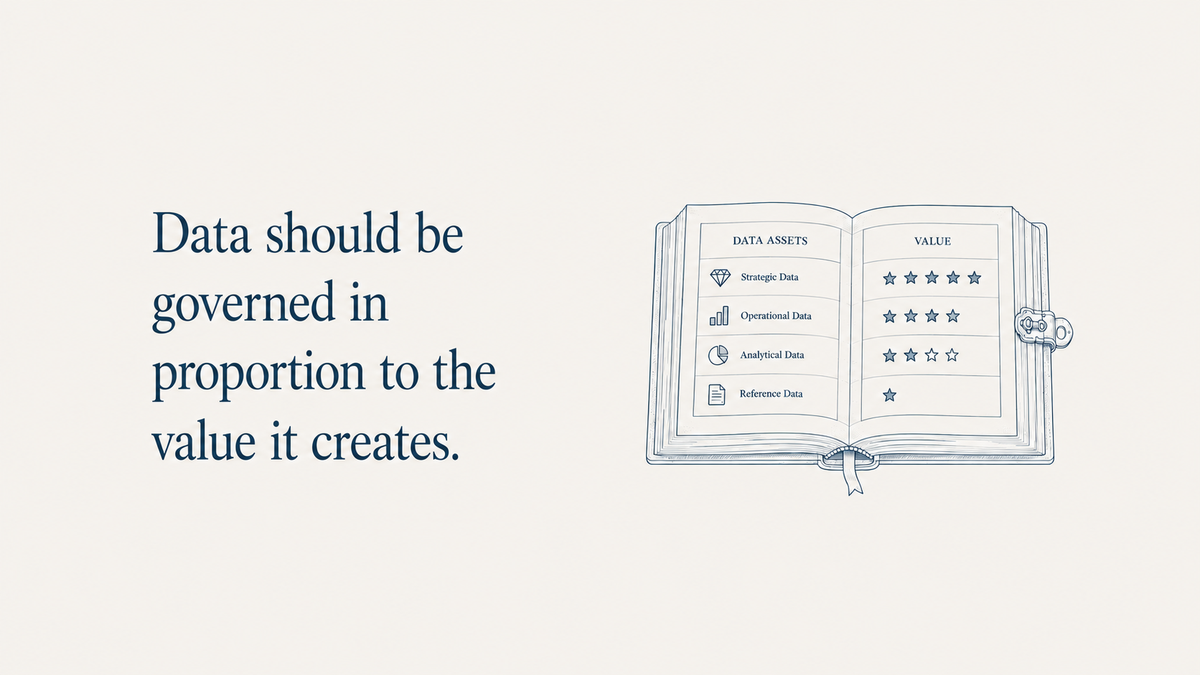
Data should be governed in proportion to the economic value it creates.