Unlearning What Once Worked
Watch someone who is excellent at their job. A Savile Row tailor does not reconsider every stitch. An experienced Sassoon hairdresser’s hands move before conscious thought. At Wagamama, a waiter does not debate the table-numbering system before running food.
They just know.
This is the achievement of organisational learning—and its hidden danger. An experiment succeeds, becomes a method, then a standard, then habit. Eventually, success removes the need to think.
The paradox is that the more successfully an organisation learns something, the less likely it may be to notice when that knowledge has expired. It has learned the answer so thoroughly that it has forgotten it was ever a question.
Unlearning, then, is not forgetting. It is making an invisible choice visible again.
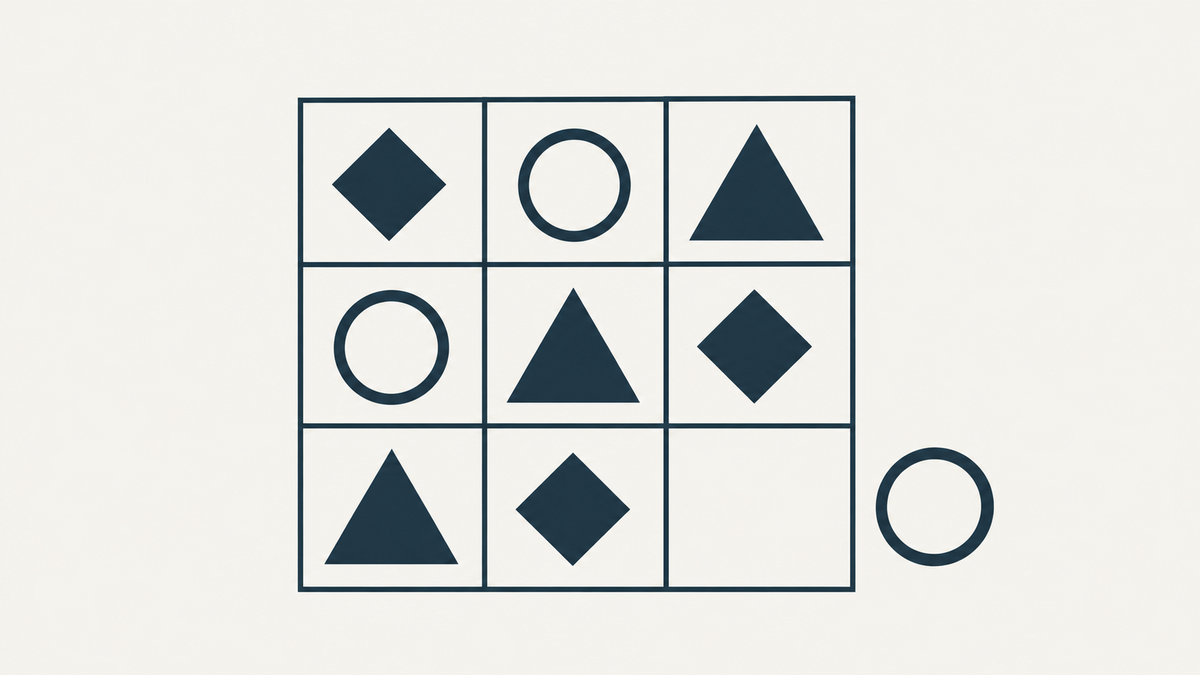
At Sassoon, this happens almost literally. An experienced hairdresser returns to learn. Her hands already “know” how to cut. The teacher interrupts: Stop. Why are you pulling the hair that way? What happens to the weight? Try it this way. An automatic action becomes a conscious choice again.
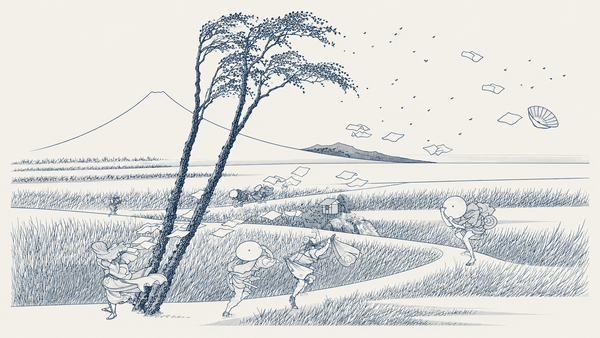
Organisations need similar interruptions: an unexpected failure, a new employee asking “Why?”, a customer behaving differently, or a competitor breaking an industry rule and succeeding. Anomalies matter because they expose assumptions insiders have stopped seeing.
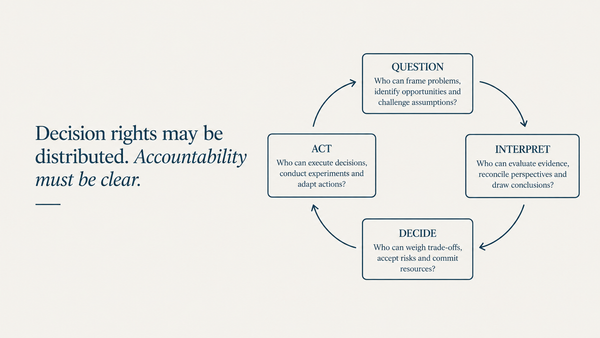
But questioning everything is no virtue. Wagamama works partly because everyone learns the same basic language: table numbers, service routines, shared responsibilities. Organisations need two gears: execution, where standards and automaticity create speed and coordination; and inquiry, where assumptions become contestable and alternatives can be tested. The managerial skill is knowing when to change gears.
Nor is changing minds enough. Yesterday’s answer lives in KPIs, incentives, software, training and promotion criteria. A company can announce, “We want experimentation,” but if a failed experiment damages someone’s career, employees have understood the real rule. If the system still reproduces the old behaviour, the organisation has not unlearned it.
The expert therefore asks a different question from the novice. Not “What is the right way?”but “Under what circumstances is this way right?”
The principle at Wagamama may endure: food should reach the customer hot. A particular method—fixed sections, perhaps—need not. A tailor’s objective remains a beautiful, durable garment; the construction technique can evolve.
That is the practical challenge: preserve the principle; keep the implementation contestable.
The enemy of learning is not always ignorance. Sometimes it is knowledge that has worked so well, for so long, that nobody remembers it contains assumptions.
Organisational adaptability is knowing when an answer has become so well learned that it needs to become a question again.