The Declining Value of Being Right
Technology cycles are shortening, but companies still make technology decisions as if they will last a decade. As choices become shorter-lived and more reversible, being exactly right upfront matters less; learning and correcting quickly matter more.
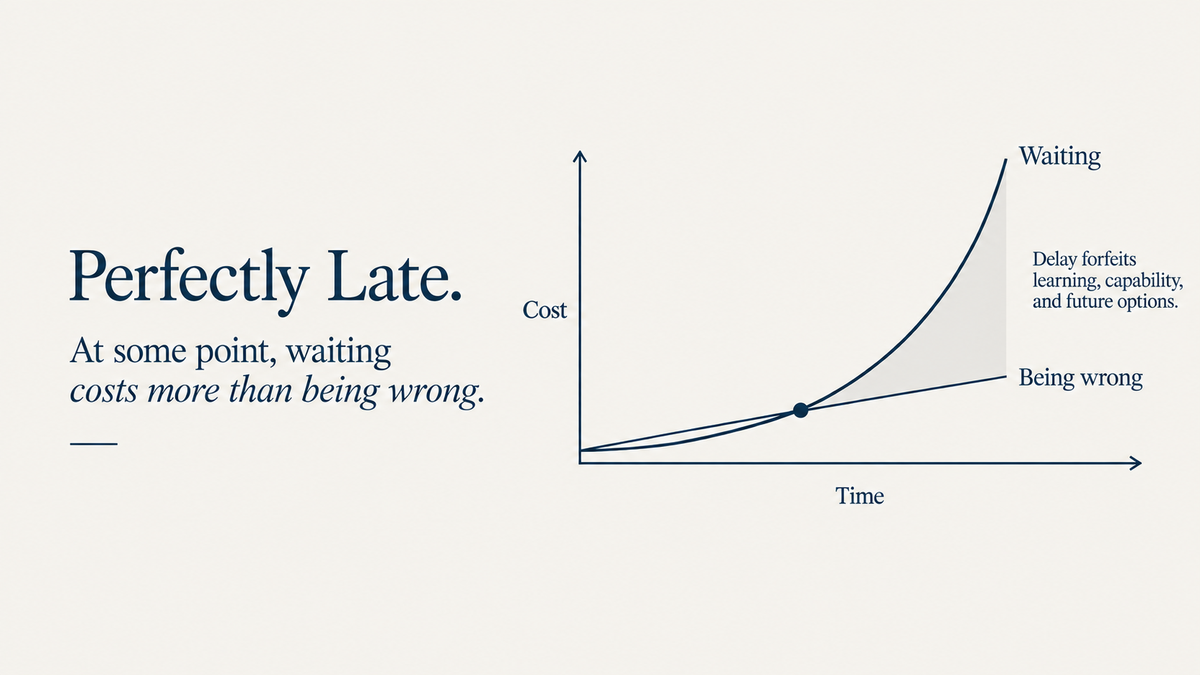
The key shift is from decision accuracy to time-to-learning. Waiting has compounding costs: delay can simultaneously forfeit learning, adoption, organisational capability, market position, momentum, and future options. In that sense, indecision has compound interest, and the cost of waiting can grow faster than the cost of being wrong.
This changes where analysis belongs. Reversibility changes the value of certainty: spend less effort optimising choices that are easy to reverse, likely to become obsolete, or unlikely to alter the company’s trajectory. Reserve deep analysis and attention for the relatively rare decisions where being early—or wrong—has lasting consequences.
The scarce capability, then, isn’t consistently choosing correctly. It’s committing soon enough to learn, recognising when the evidence changes, and correcting quickly.