The Artistic Edge
One of the highest-return periods of Sam Altman’s career had few of the usual signs of productivity. No job, no grand plan. He read textbooks, wandered through nuclear engineering, AI, synthetic biology and investing, and spent time with people who knew things he didn’t. Most of it, he later said, went nowhere. Some of it mattered enormously—years later.
That is the awkward economics of exploration: the return often arrives long after the activity that produced it. Its most valuable uses may not even exist when the exploration occurs. Exploration has option value precisely because its eventual combinations cannot be known in advance.
We usually think expertise compounds through depth. Stay in a field long enough and you notice what newcomers miss. True—but incomplete. At the frontier, expertise changes form.Progress comes less from going deeper inside the established map and more from importing models, questions or constraints from outside it.
The useful distinction is not depth versus breadth. It is depth plus distance.
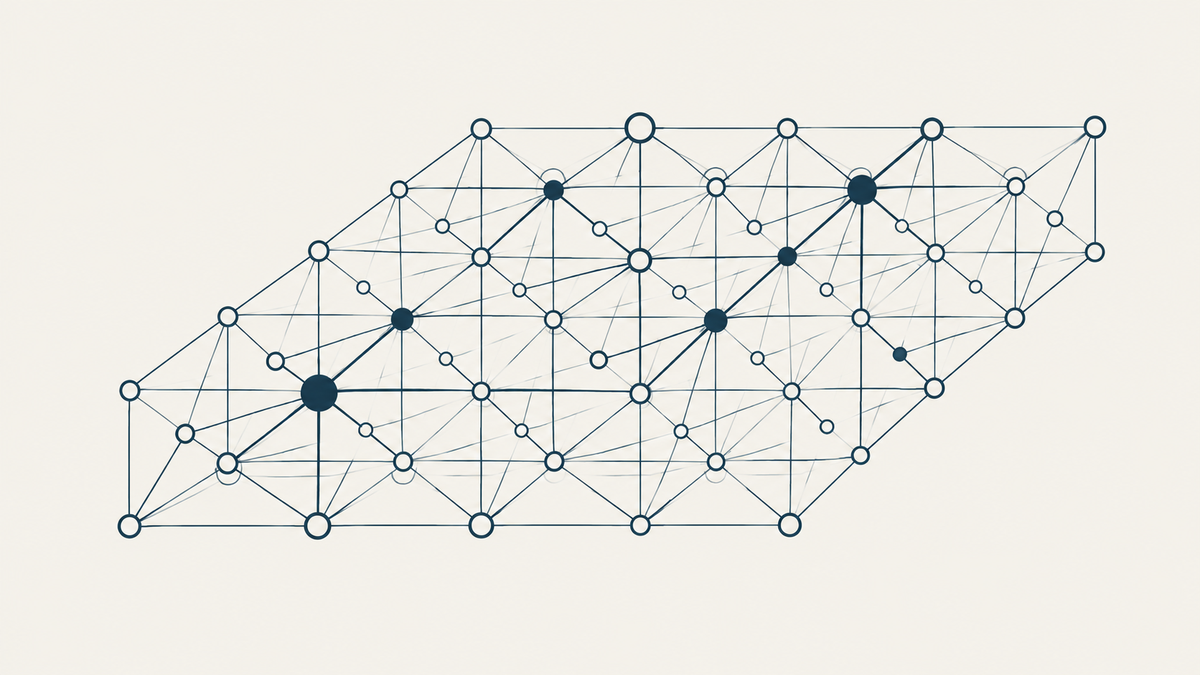
Distance matters because nearby ideas have usually met already. Put engineering beside engineering and the combinations are relatively predictable. Put engineering beside biology or investing and stranger things can happen. What is ordinary in one field can be revelatory in another.
Originality is partly distance × synthesis.
This makes the shape of experience more interesting than its length. Ten years can contain ten different worlds—or one year repeated ten times. But variety alone merely produces an eclectic CV. The trick is to metabolise it: to turn unrelated experiences into judgement.
And this need not be accidental. Distance × synthesis can be designed. Careers can cross domains; teams can combine people whose intellectual worlds rarely overlap; institutions can create collisions between disciplines. The aim is not variety for its own sake, but distance that can actually be synthesised.
Every mature discipline has two territories. At its centre, the questions are known, evidence accumulates and established methods deserve authority. At its edge, even the question may be unsettled.
Science governs the known; art reaches toward the not-yet-known.
That is not licence to ignore evidence. It is a question of timing. At the frontier, evidence often runs out before decisions do. Judgement temporarily carries more weight. Governing an immature frontier by mature evidentiary standards can be a wonderfully rigorous way to discover nothing.
AI sharpens the point. As established knowledge becomes cheaper, merely possessing it becomes less scarce. The advantage shifts toward deciding what matters, importing the unexpected model and seeing the connection before it becomes obvious.
When knowing is cheap, the premium moves to judgement.